
Homes are filled with toxins. How do we improve their quality?

Modern day construction hasn’t solved the problem of toxic housing. On top of old school irritants like mold, lead and asbestos; new homes and apartments reportedly contain enough formaldehyde to cause significant lung damage over time. Efforts are underway to better educate the public about the dangers and help remove the toxins, including a large-scale effort to replace lead water pipes.
New housing construction
Environmental researcher and author of the new book Homesick, Nick Shapiro says, “Finding a home that’s not absolutely brand new and hasn’t been renovated before the 1980s,” is healthier for you.
Why? Homes used to be built using lathe and plaster walls, a very labor-intensive process. Now we use drywall and engineered woods held together with plastic resin made from formaldehyde. Especially when it’s hot and wet it lets off toxic gasses. Other big contributors of off-gassing are carpeting, cabinetry and mattresses. According to Shapiro, “our homes are slowly filling with all of these volatile organic compounds.”
Formaldehyde can irritate the eyes, cause bloody noses, exacerbate asthma and cause cancer.
ProPublica did an investigation in 2024 by taking a scientific air pump inside New York and New Jersey carpet outlets, furniture stores, nail salons, cosmetics stores, apartments and houses and found high levels of formaldehyde.
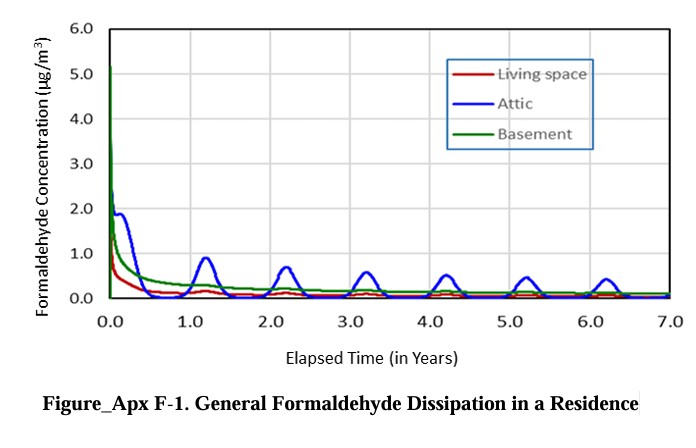
The Environmental Protection Agency says continuous daily exposure to concentrations of formaldehyde above 7 micrograms per cubic meter of air may cause decreased lung function. According to a joint survey with the EPA and the Department of Housing and Urban Development, the average level inside a home is 23.2 micrograms for every cubic meter of air.
It takes years to dissipate according to the American Healthy Homes Survey.
Mold
A basement in the Cincinnati neighborhood of Mt. Auburn has had fuzzy white mold on paneling, drywall and wooden beams for years. The homeowner knew it was bad but was trying to save up the money to remove it. She developed a cough.
“Maybe 10 years ago it started. And I never knew why it happened so randomly and why it was so bad,” said the resident who didn’t want to be identified.
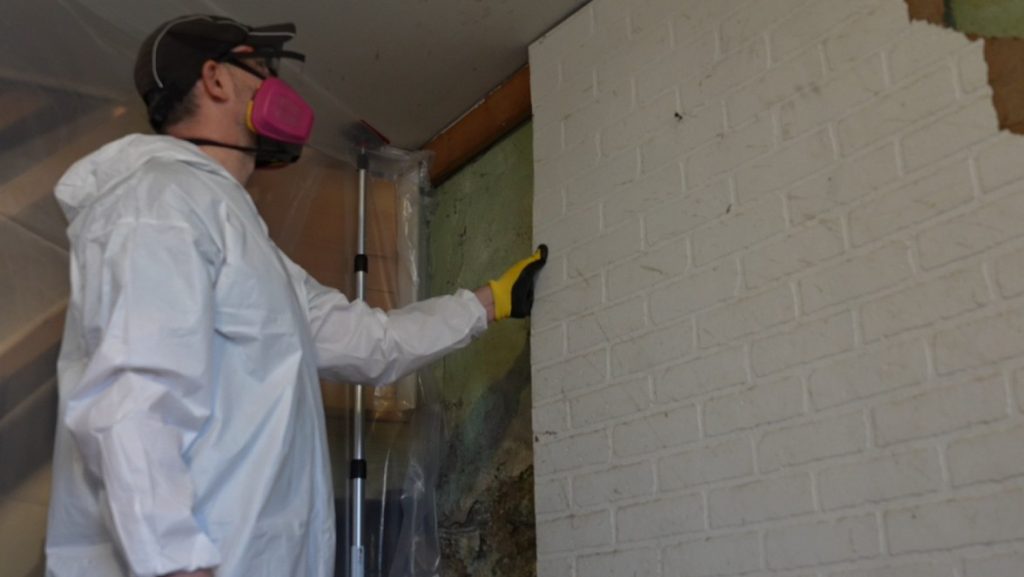
People Working Cooperatively came to the rescue at no cost. The Cincinnati non-profit provides critical home repairs for eligible residents and recently started focusing on the root causes of homeowner health, according to the agency’s Aaron Grant.
“This is an example of how we’re trying to look a little bit deeper into how the home is impacting some of these health outcomes, especially for people who might have illnesses related to their environment like asthma or other respiratory illness,” he says.
Grant is removing the mold covered building materials and better managing water runoff from the gutters.
In Hamilton County if the mold is in a rental, the health department investigates and issues citations. Jeremy Hessel is Director of the Environmental Health Division. Over the years, he’s seen plenty of mold. Here’s one example:

“The water had been down there for quite some time, about three feet of water in the basement, which they never corrected and then the mold is starting to grow on these surfaces down here in the basement.”
The Hamilton County Health Department gets about two or three mold complaints a day, in all sorts of housing types.
Scientists published in the International Journal of Hygiene and Environmental Health say childhood exposure to household mold raises the risk of developing asthma.
Hamilton County, Public Health Dayton Montgomery County and the City of Cincinnati have plenty of resources for people to rid their homes of toxins, including a free visual inspection service for mold and lead paint, paint chip sampling, blood testing and the borrowing of vacuums with filters to clean up lead dust.
Lead paint
The CEO of Miami Valley Community Action Partnership Erin Jeffries told the Dayton Daily News, “Ohio ranks second in the nation for elevated blood lead levels and our children are more than twice as likely to have elevated blood levels compared to the national average.”
Part of the problem is Cincinnati and Dayton have some of the oldest homes in the nation, averaging more than 40 years old. Brick by Brick focused on this in our preservation episode.
The government prohibited lead-based paint for consumer use beginning in 1978, but in older homes children are ingesting it because they play on the floor and put their hands in their mouths.
Brick by Brick’s Hernz Laguerre Jr. investigated the risks and talked to one homeowner who knew she had to do something about it.
Ohio has cut its lead abatement funding from $7.5 million a year to $250,000 and stopped funding its $1 million a year Lead-Safe Home Fund Program. State Health Director Bruce Vanderhoff told the Columbus Dispatch, “The loss of this funding puts more children in Ohio at risk for health problems related to lead exposure.”
Lead Pipes
Lead in drinking water can cause developmental delays, high-blood pressure, kidney damage and more. The federal government has mandated all public water systems identify and replace lead pipes by 2037.
Dayton estimates it has more than 9,000 lead service lines to replace, which will cost an estimated $200 million. It’s in the process of figuring out funding. Cincinnati is ahead of the game but is feeling the pressure to go faster.
Based on EPA regulations, Cincinnati must replace 3,000 lines a year, nearly doubling what it did in 2025. The city started the process in 2016, years before most other cities.
Moerlein Construction is one of many contractors Greater Cincinnati Water Works is using to replace the lead pipes with copper from the street to the house. It had an especially big challenge with one North Avondale property and its porch in December, according to Ernie Greene, Assistant Supervisor of Construction Inspection for the Water Works.
“It also had a footer that this foundation had rested on that was incredibly thick. So, we had to drill through there.”
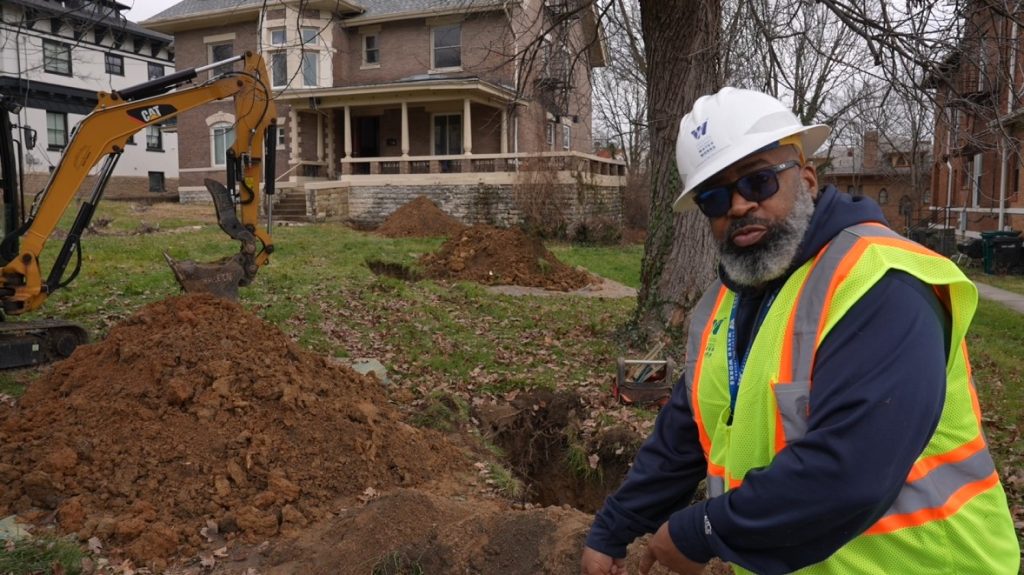
Greene’s crew added an extra level of protection to the line that looks like an industrial swim noodle. They covered it up with sand and dirt and then went inside to prepare the hook-up.
Because Water Works and its customers are footing the bill, replacing thousands of lead service lines gets expensive, according to Lead Program Manager Kevin Kappers.
“We’re constantly analyzing the cost of service. We say how much does it cost us to do our business? And that has to be reflected in rates.”
It used to be first come first served, but Water Works has prioritized replacement based on a new University of Cincinnati model. It identifies populations most vulnerable to lead to be put at the front of the line.
Radon Gas and Thirdhand Smoke
Radon gas is a naturally occurring, radioactive, colorless, odorless gas that comes from the breakdown of uranium rocks. It seeps into buildings and can cause health risks over time. The Columbus Dispatch tested 68 homes in September and October and 54 of them had a reading above the EPA threshold of 4. The fix is installing a system which vents it from beneath the house foundation.
Firsthand and secondhand cigarette smoke can cause health problems. What about thirdhand smoke? In a 2025 report, Cincinnati Children’s Hospital researchers found lingering tobacco smoke in dust, old carpets, couches and other surfaces and ultimately on the hands and in the saliva of kids. They lived in homes where nobody smoked, and there were strict, no-smoking rules.
Toxins at federally funded housing sites
It’s come to light that the government built some housing projects near contaminated sites.
An investigation published in June 2020 by the former Shriver Center on Poverty Law and EarthJustice found evidence of toxins in the air, the soil, in paint and in drinking water in East Chicago, Indiana. The Shriver Center filed a civil rights complaint with HUD and according to Earthjustice Managing Attorney Midwest Office Debbie Chizewer, one of the most disturbing pieces of evidence from the 1960s was what a politician said.
“A mayor of East Chicago was quoted as saying, “We’re going to build this housing here because it may not be desirable, but it’s where the other Black and Brown people live.”
The complaint led to some relief for the community, but it was too little too late for residents. However, they were able to get housing vouchers to move to other communities. East Chicago isn’t alone in its contamination.
Earthjustice is calling on the EPA to strengthen its standards for cleanup of lead and soil and, “I think another thing that we advocated for is making sure that we are not citing public housing or federally assisted housing near contaminated sites. And that requires more thoughtfulness in decision making, both for HUD that’s making decisions about citing. It requires more attention by local governments and thinking about zoning and thinking about looking at the impacts.”
She also says there needs to be more community engagement. For the clean-up, Earthjustice wants to force polluters to pay and if they can’t, they say the EPA’s nationwide program to identify, clean-up and return contaminated sites to productive use- needs to be fully funded by Congress.

Limitations
Removing toxins from your home can be expensive and that may limit your ability to do it. As in the case of the Mt. Auburn homeowner, the mold caused her to cough but until People Working Cooperatively was able to do the work at no cost, she just dealt with it. City and county health departments have a variety to programs to identify mold and lead but they don’t necessarily pay for its removal, especially since the cuts to state funding.
Also, when buying a new home, most cabinets and laminate flooring have formaldehyde. There are materials without it but generally they are more expensive.
However, it doesn’t increase the cost as much as you might think according to one study. Eco-Home did an analysis in 2021 and found that a green kitchen with formaldehyde free cabinets, excluding countertops and taxes, is $1,300 more than ones with formaldehyde.
Here’s another limitation. Workers who remove lead and mold are in short supply. One of the contractors for the Greater Cincinnati Water Works mentioned this is a concern going forward, because every city in the country is now having to remove lead pipes.
Benefits
The solutions we’ve examined all involve removing toxins from the home. How effective is this strategy? Very effective if it’s before any long-term cognitive or lung damage. Thirty years ago in Philadelphia, with some of the oldest homes in the country, Children’s Hospital launched the Community Asthma Prevention Program. It sends community health workers into the home to educate and make small changes and partners with various home repair agencies to fix structural defects.
A 2023 study found fewer asthma symptoms, less hospitalizations, and emergency room visits. People interviewed also reported quality of life improvements, and a broader sense of well-being.
Looking ahead
Environmentalists often look to Europe for more progressive regulations but there has been some disturbing news. Recently Europe rolled back its regulations on formaldehyde, essentially doubling the level that workers are allowed to be exposed to.
In the U.S., ProPublica reported in December 2025 the EPA was “revising an assessment of the health dangers posed by formaldehyde. The proposed changes nearly double the amount of formaldehyde considered safe to inhale. That’s compared with the version finalized in the last weeks of the Biden administration. “Even that older assessment significantly underestimated the dangers posed by formaldehyde, a ProPublica investigation published in 2024 found.”
The new EPA guidelines are still under revision and taking public comment.
Were you surprised by the amount of toxins in our homes? Will people make changes? And will the government set new limits? We want to build community around context and solutions in our cities. Your feedback is very important to the effort, as we continue to dig deeper into the responses to some of our most pressing social issues, including the housing crisis. Click on the green button below to take a short survey to help reinforce and refine our work. Thank you.

Ann Thompson – Host, Producer
Over the last thirty years in Cincinnati, Ann Thompson has brought a wealth of knowledge and expertise to her reporting. She has reported and anchored for WVXU, WKRC, WCKY, WHIO-TV and Metro Networks and freelanced for NPR, CBS and ABC Radio. Her work has been recognized by the Associated Press and she has won awards from the Association of Women in Communications and the Alliance for Women in Media. She is a former News Director and Operations Manager. Ann has reported from India, Japan, South Korea, Germany and Belgium as part of fellowships. Ann thinks of the Brick by Brick project as “journalism for good.” She serves as host and producer. Ann lives in Anderson Township with her husband Scott. They have two boys. Jake graduated from the Air Force Academy in 2022 and Kurt attends West Point.

